Kitchen Remodeling for Older Homes in Rockville, MD
Quick Take: Kitchen remodeling for older homes in Rockville often involves more than cosmetic updates. Kitchens built in the 1970s through 1990s often need electrical upgrades, layout improvements, and better storage. With the right planning, most projects take about 6 to 10 weeks and make the space far easier to use.
If you live in an older home around Rockville, Bethesda, or Chevy Chase, there is a good chance the kitchen still reflects the time when the house was built. Many of these homes were built in the 1970s, 80s, or 90s, and while the structures have held up well, the kitchens often feel dated or cramped compared to modern layouts.
Updating an older kitchen usually involves more than swapping cabinets or countertops. You might run into electrical upgrades, layout changes, or storage improvements along the way. Below you will see what typically happens during kitchen remodeling for older homes and what you should expect before construction even starts.
Why Older Homes Often Need Kitchen Remodeling
Many kitchens in older Rockville homes still have their original layout and finishes. Even if everything technically still works, the space often feels limited compared with newer kitchens.
A big reason is how homes were designed back then. Kitchens were usually closed off from the rest of the house, which made the room feel smaller and darker. Storage was also limited. Cabinets were shallow, corner spaces were awkward, and pantry space was often minimal.
Over time, materials begin to wear out as well. Cabinet doors loosen, laminate countertops chip, and lighting fixtures start to look outdated. After twenty or thirty years, those small issues begin to add up.
That is usually when homeowners begin thinking about kitchen remodeling to improve the layout and make the kitchen easier to live with every day. Before planning design changes, though, it helps to understand what might be hiding behind the walls.
Hidden Problems Behind the Walls
One thing you learn quickly when remodeling older homes is that the real surprises are often behind the drywall. Once demolition begins, contractors sometimes discover systems that need updating.
Electrical upgrades are very common. Kitchens built decades ago were not designed for the number of appliances people use today. Modern refrigerators, wall ovens, and induction cooktops can require additional circuits and updated wiring.
Plumbing can also reveal problems. Older supply lines or outdated shutoff valves sometimes appear once cabinets are removed. Addressing these issues during the remodel helps avoid bigger problems later.
Structural integrity is another factor. If you want to remove a wall to open the kitchen to the dining room, that wall might be supporting part of the house. In that case, the structure needs reinforcement before the layout can change safely.
Once these potential issues are understood, it becomes easier to tackle the layout challenges common in older kitchens.
Layout Problems Common in Older Kitchens
Many kitchens in older homes run into the same layout issues, and understanding them helps explain why remodeling can make such a big difference.
Closed Floor Plans
Older kitchens were often built as separate rooms. While that once helped keep cooking mess contained, it can make the space feel disconnected from the rest of the house.
Opening the kitchen toward nearby living or dining areas can bring in more natural light and make it easier to interact with family or guests while cooking.
Tight Work Areas
Another issue is the limited space between counters and appliances. Older kitchens rarely followed the spacing standards designers use today.
Most modern kitchens aim for about 42 to 48 inches between countertops so two people can move comfortably without bumping into each other.
Limited Storage
Storage tends to be one of the biggest frustrations in older kitchens. Cabinets were not designed for the cookware and appliances that many households use today.
Replacing older cabinetry with well-planned kitchen cabinets can completely change how the space works, especially when deep drawers and pull-out storage are included.
After fixing the layout issues, homeowners usually focus on adding features that make the kitchen more functional.
Modern Features That Improve Older Kitchens
Kitchen remodeling for older homes often focuses on practical upgrades that make everyday cooking easier while still keeping the character of the house.
Some of the most common improvements include:
- Wider walkways and better workflow so the kitchen feels less cramped
- Large islands with seating for meal prep and casual dining
- Custom cabinetry with modern storage features such as pull-out shelves and deep drawers
- Layered lighting, including under-cabinet lights and task lighting
- Energy-efficient appliances that use less electricity and water
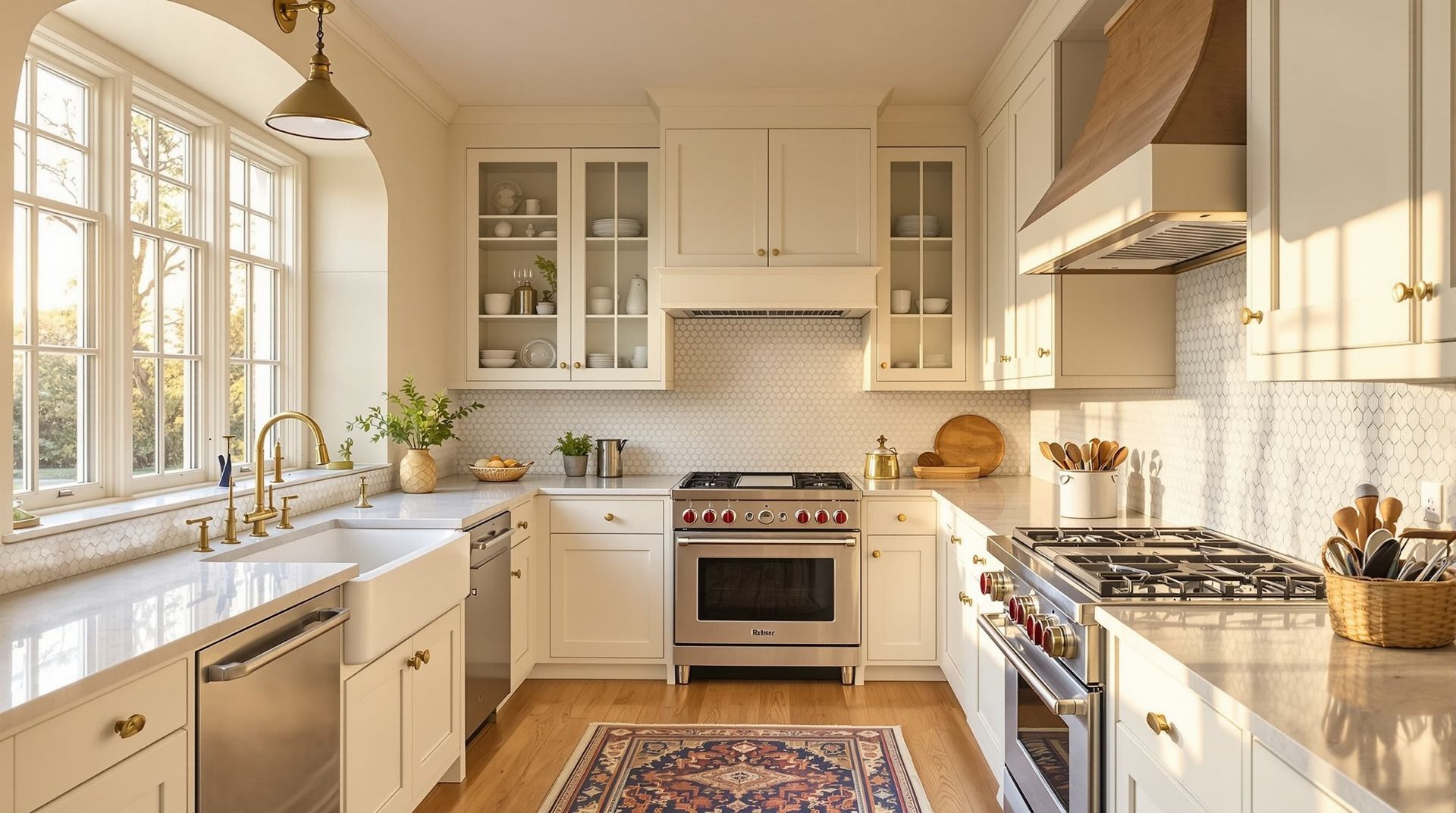
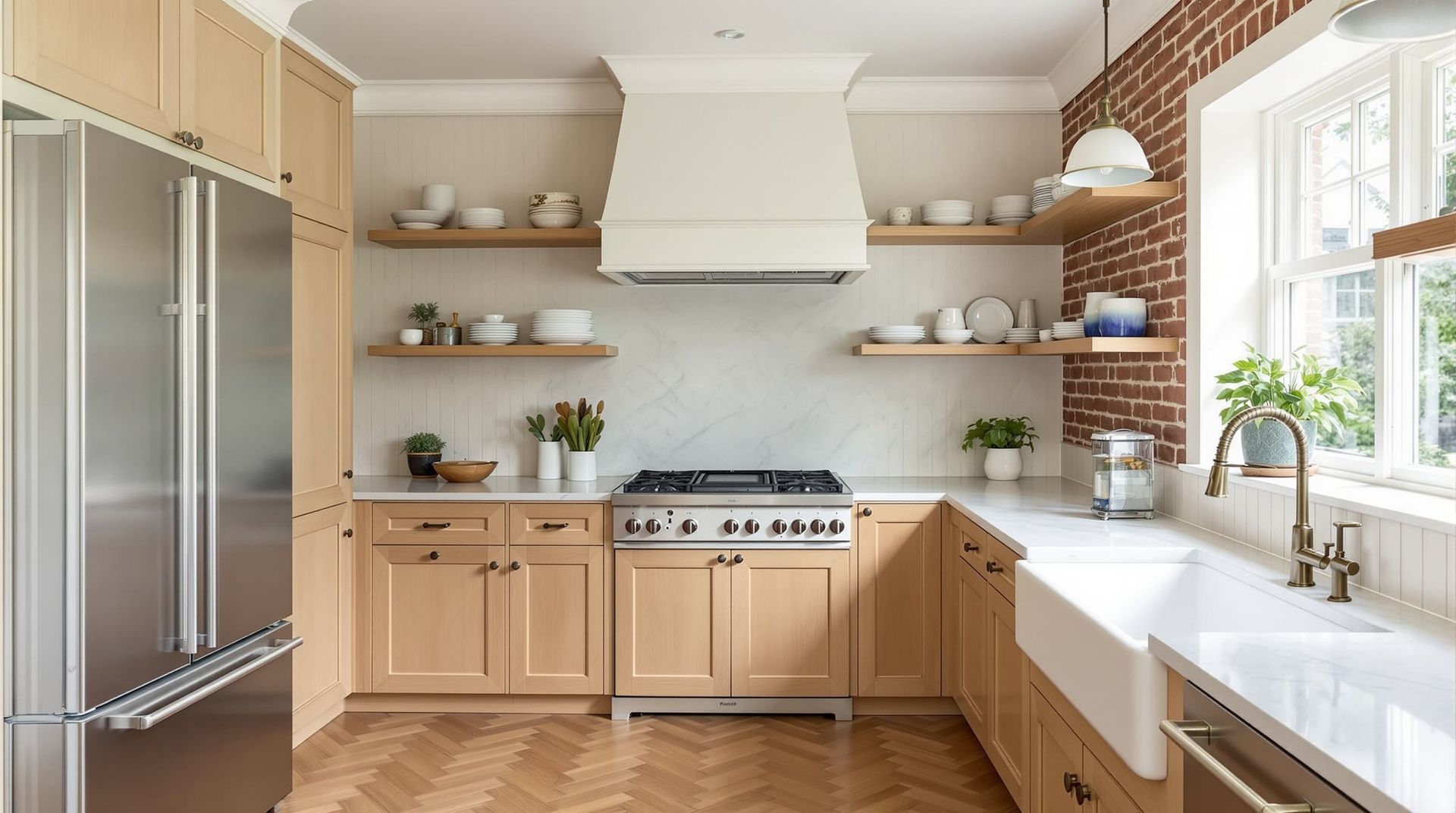
Many homeowners also like mixing modern upgrades with classic finishes. Shaker cabinets, natural wood tones, and simple tile backsplashes often work well in older homes without making the space feel out of place.
Once you start thinking about these upgrades, the next step is planning the remodel carefully.
Planning a Kitchen Remodel in an Older Home
Planning becomes especially important when working with older homes. A little preparation early on can prevent a lot of headaches later.
Most projects begin with a design phase where the kitchen is measured, and the layout is carefully planned. During this stage, professionals evaluate structural conditions and decide where appliances, plumbing lines, and electrical connections should go.
Homeowners often update multiple spaces at once, which is why bath design planning sometimes happens during the same stage as the kitchen design.
Permits are another part of the process. Montgomery County often requires permits for electrical upgrades, plumbing adjustments, or structural changes. Handling these details early keeps the project moving smoothly.
Planning also helps you prepare for daily life during construction, which is the next thing most homeowners wonder about.
Why Design Build Remodeling Simplifies Older Home Renovations
Older homes can involve more moving parts than newer houses. Electrical upgrades, plumbing adjustments, and layout changes may all need to happen at the same time.
Working with a design-build team helps keep everything coordinated.
This approach usually helps homeowners because:
- The same team handles design and construction, which keeps communication clear
- Potential problems are identified earlier during the design phase
- Budgets are easier to manage because costs are discussed early
- Scheduling stays organized as electricians, plumbers, and installers follow a coordinated plan
Homeowners who upgrade kitchens sometimes update bathrooms around the same time, which is why related projects like bath remodeling often happen during larger home renovations.
Once construction begins, knowing what happens next can make the process feel far less stressful.
What to Expect During Construction
Kitchen remodeling usually follows a predictable sequence, although older homes occasionally bring small surprises along the way.
The project typically begins with demolition. Contractors remove cabinets, countertops, flooring, and sometimes walls to expose the structure of the space.
Next comes rough construction. Electricians install new wiring, plumbers adjust pipes, and structural beams may be added if walls were removed. Once inspections are completed, drywall and flooring go in.
Cabinet installation follows after that. Countertops, appliances, lighting, and backsplashes are usually installed during the final stage.
Most kitchen remodels in older homes take around six to ten weeks, depending on the complexity of the work. Once everything is finished, the difference in functionality can be dramatic.
Conclusion
Kitchen remodeling for older homes is rarely just about updating finishes. Many projects involve improving layouts, upgrading electrical systems, and adding storage that older kitchens simply were not designed to provide.
With the right planning and experienced guidance, those changes can transform the kitchen into a space that works far better for modern living while still preserving the charm of the home.
Ready to Update Your Older Kitchen in Rockville?
If you are thinking about remodeling your kitchen in an older Rockville home, starting with the right planning process makes a huge difference. A thoughtful design can solve layout problems, improve storage, and address structural or electrical concerns before construction begins.
Schedule a consultation to explore your options and see how a well-planned remodel can turn an outdated kitchen into a space that works better every day.