

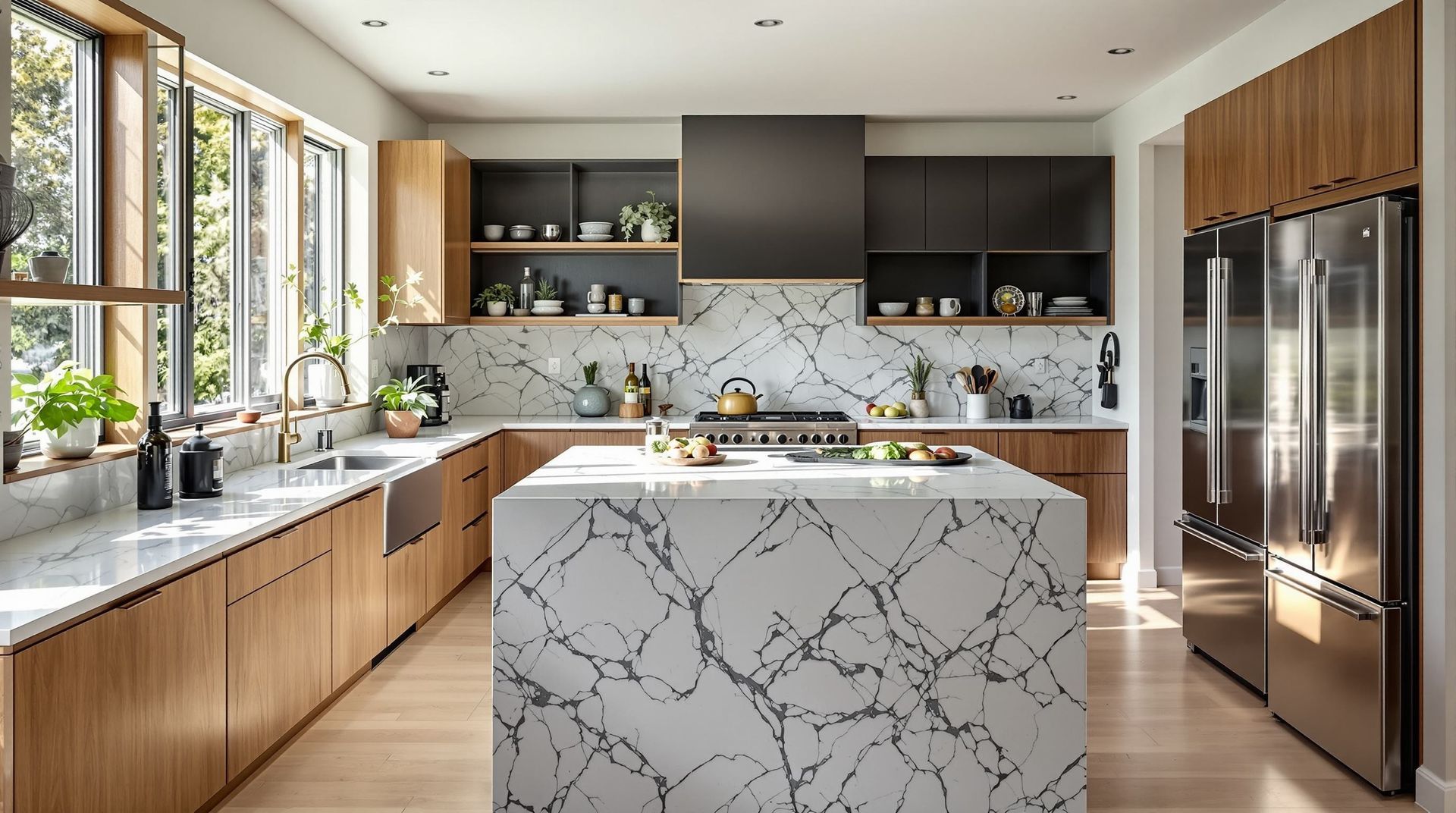
Kitchen Remodeling in Rockville, MD: Layout Tips
Quick Take: Kitchen layout mistakes usually come from workflow problems, not material choices. When appliance spacing, cabinet placement, and walkways are planned correctly, the kitchen becomes much easier to use. Many Rockville homes built in the 1980s and 1990s benefit most from fixing layout issues during a remodel.
A kitchen can look great after a remodel and still feel frustrating to use. Maybe the refrigerator door blocks the walkway. The dishwasher opens, and suddenly no one can get to the sink. Two people try to cook at the same time and end up bumping into each other. When that happens, the problem usually is not the cabinets or countertops. It is the layout.
The way a kitchen is arranged affects how you move, cook, and store things every day. Small decisions about appliance placement, cabinet locations, and island size shape how the room functions. Below are common kitchen layout mistakes to watch for before starting a remodel.
1. Overlooked Kitchen Work Triangle
You may have heard designers talk about the kitchen work triangle. It simply refers to the path between the sink, stove, and refrigerator. Most of your cooking activity happens between those three spots.
If those appliances sit too close together, the kitchen feels cramped. If they are too far apart, you spend half your time walking back and forth while cooking. A good rule of thumb is to keep each side of the triangle somewhere between about 4 and 9 feet.
We see this problem a lot in older Montgomery County kitchens. Appliances were often placed along walls without thinking about how someone actually cooks. That is when you end up walking around an island just to move from the refrigerator to the sink.
Good kitchen design usually maps these distances early in the planning stage. When you get that triangle right, cooking feels smoother and more natural. Once those main work areas make sense, the next thing to look at is how people move through the kitchen.
2. Poor Traffic Flow Turns Kitchens Into Bottlenecks
A kitchen should allow people to move around easily, even while someone is cooking. When walkways overlap with work zones, the space quickly becomes a bottleneck.
Picture someone unloading groceries while another person is at the sink. If the refrigerator opens into the main walkway, everyone ends up waiting or squeezing past each other. This happens a lot in open floor plans where the kitchen becomes the shortcut between rooms.
A few simple spacing guidelines help prevent that problem.
- Walkways between counters usually work best around 42 to 48 inches wide.
- Islands should leave at least about 36 inches of clearance around them.
- Main walkways should not cut straight through the cooking zone.
Those measurements help multiple people use the kitchen at the same time without constantly getting in each other’s way.
Many homeowners only realize the traffic flow problem after starting a kitchen remodeling project. Fixing it during the design phase is much easier than adjusting cabinets later. Once circulation works better, the next thing to examine is the kitchen island.
3. Kitchen Islands That Are Too Big for the Room
Kitchen islands are popular for good reason. They add storage, prep space, and often become the gathering spot for family or guests. But when an island is oversized for the room, it can quietly create workflow problems.
A lot of people try to maximize island size because it looks impressive on a floor plan. The problem appears once the kitchen is finished. Suddenly, the refrigerator door hits the island. The dishwasher blocks the walkway when it opens.
Spacing makes a big difference here. Most kitchens need at least about 36 inches of clearance around the island, though 42 to 48 inches often works better if the kitchen gets heavy use.
Another thing to check is appliance movement. Refrigerator doors, oven doors, and dishwashers all need room to open without blocking the path through the kitchen.
We usually look closely at island sizing during early planning because once cabinets are installed, changes become difficult. Island size also ties directly into cabinet placement, which is another area where small mistakes can create daily frustration.
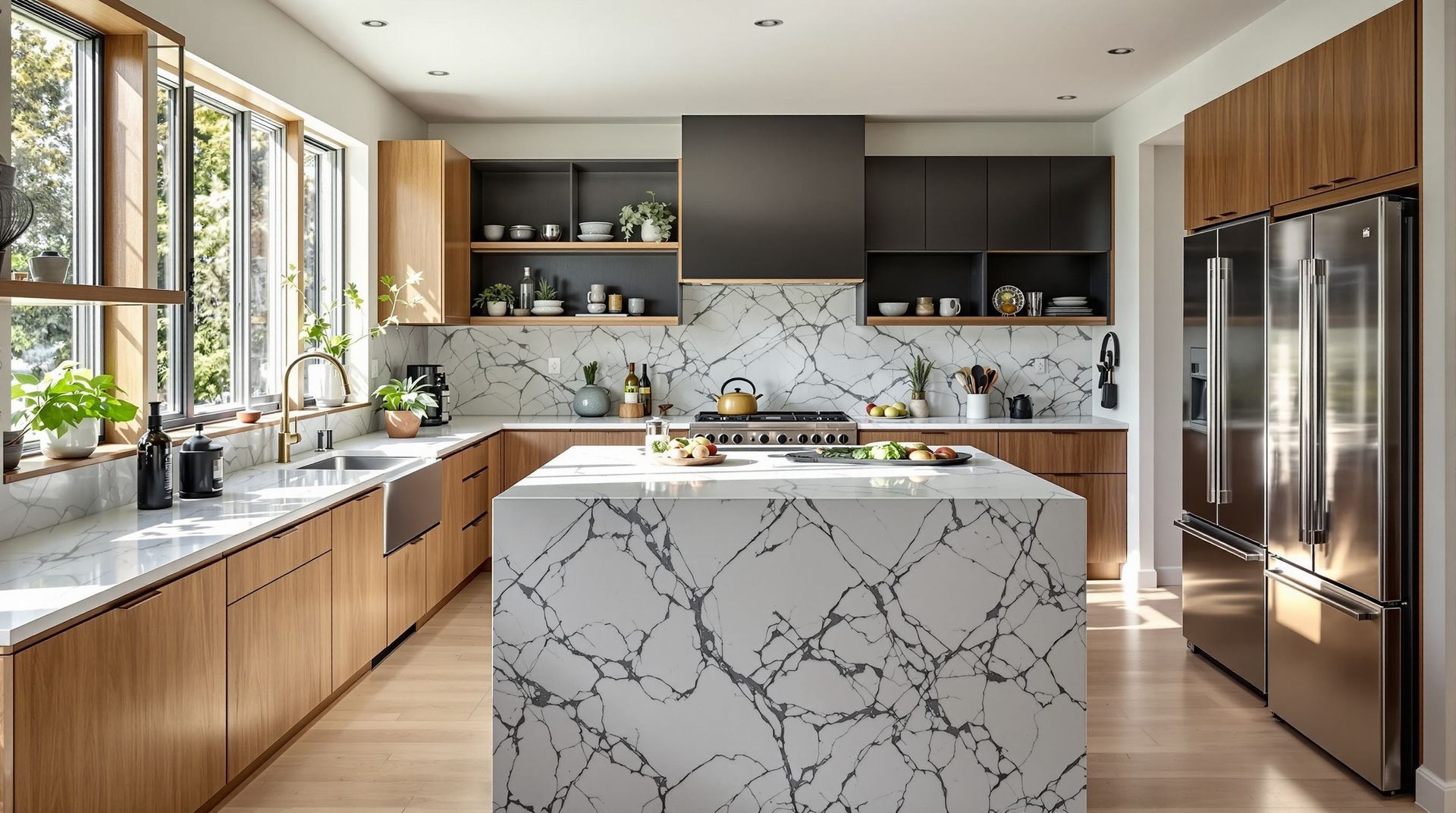
4. Cabinet Placement That Creates Daily Frustration
Cabinets provide most of the storage in a kitchen, but where they sit matters just as much as how they look. When cabinet placement does not match how you actually cook or clean, simple tasks take longer than they should.
Think about unloading the dishwasher. If dish cabinets sit across the kitchen, you end up walking back and forth every time. The same thing happens when spices are stored far from the cooktop or when trash bins sit on the opposite side of the room from the prep area.
A good cabinet layout usually groups storage based on activity zones.
For example:
- Dish cabinets near the dishwasher
- Pots and pans near the cooktop
- Trash pullouts near the sink or prep area
- Pantry storage near the refrigerator
Well-planned kitchen cabinets make these zones feel natural. You reach for things where you expect them to be instead of wandering around the kitchen looking for what you need.
Once cabinet zones are organized around daily tasks, the next step is making sure appliances work smoothly with that layout.
5. Appliance Placement That Interrupts Workflow
Appliances can quietly create problems if they are installed without thinking about the movement around the kitchen. Even when cabinets are arranged well, a poorly placed appliance can disrupt the entire workflow.
Refrigerators are a common example. If the refrigerator sits at the end of a counter run, the door may swing directly into the walkway. Anyone grabbing a drink blocks the entire path through the kitchen.
Dishwashers can cause similar issues when placed too close to corners. Once the door opens, it can trap someone standing at the sink or prevent nearby cabinets from opening.
When we review kitchen layouts, we usually walk through everyday scenarios. Can someone open the refrigerator while another person is cooking? Can two people move around the island at the same time? These simple checks reveal problems before construction begins.
When appliances and cabinets work together, the kitchen starts to feel balanced. Getting that balance right usually happens during the planning stage.
Layout Problems Usually Begin During Planning
Most layout mistakes do not happen during installation. They start earlier when planning decisions focus more on finishes than on function.
It is easy to spend time choosing cabinet colors, lighting, and countertops. Those details matter, but they do not fix workflow problems. Layout decisions shape how the kitchen works every single day.
Many homes in Rockville and the surrounding Montgomery County area were built in the 1980s and 1990s. Those kitchens were designed for smaller appliances and different cooking habits. Updating the layout during a remodel can dramatically improve how the space functions.
Our team often reviews floor plans and quickly notices issues like narrow walkways, oversized islands, or appliances placed in awkward spots. Catching those problems during the design phase saves time and money later.
Once the layout works on paper, the rest of the remodel becomes much easier to plan.
Conclusion.
A kitchen that feels easy to use usually comes down to good planning. Appliance spacing, cabinet placement, and walkway clearance all work together to support daily routines.
Many homeowners focus first on finishes, but layout decisions often have a bigger impact. Fixing traffic flow, adjusting cabinet zones, and improving appliance placement can change how comfortable the kitchen feels.
Planning these details early lets you solve problems before construction starts. That approach helps avoid expensive adjustments later and creates a kitchen that works well for years.
Planning a Functional Kitchen Layout
At Kitchen and Bath Depot in Rockville, we work with homeowners throughout Montgomery County to evaluate how their kitchens function and where the layout can improve. Looking at design options side by side helps you understand what will actually work in your space.
If you are also planning a larger renovation, you can review other projects at the same time, such as bath remodeling. Thinking about the whole home together often leads to smarter renovation decisions. Contact us today!